
Description
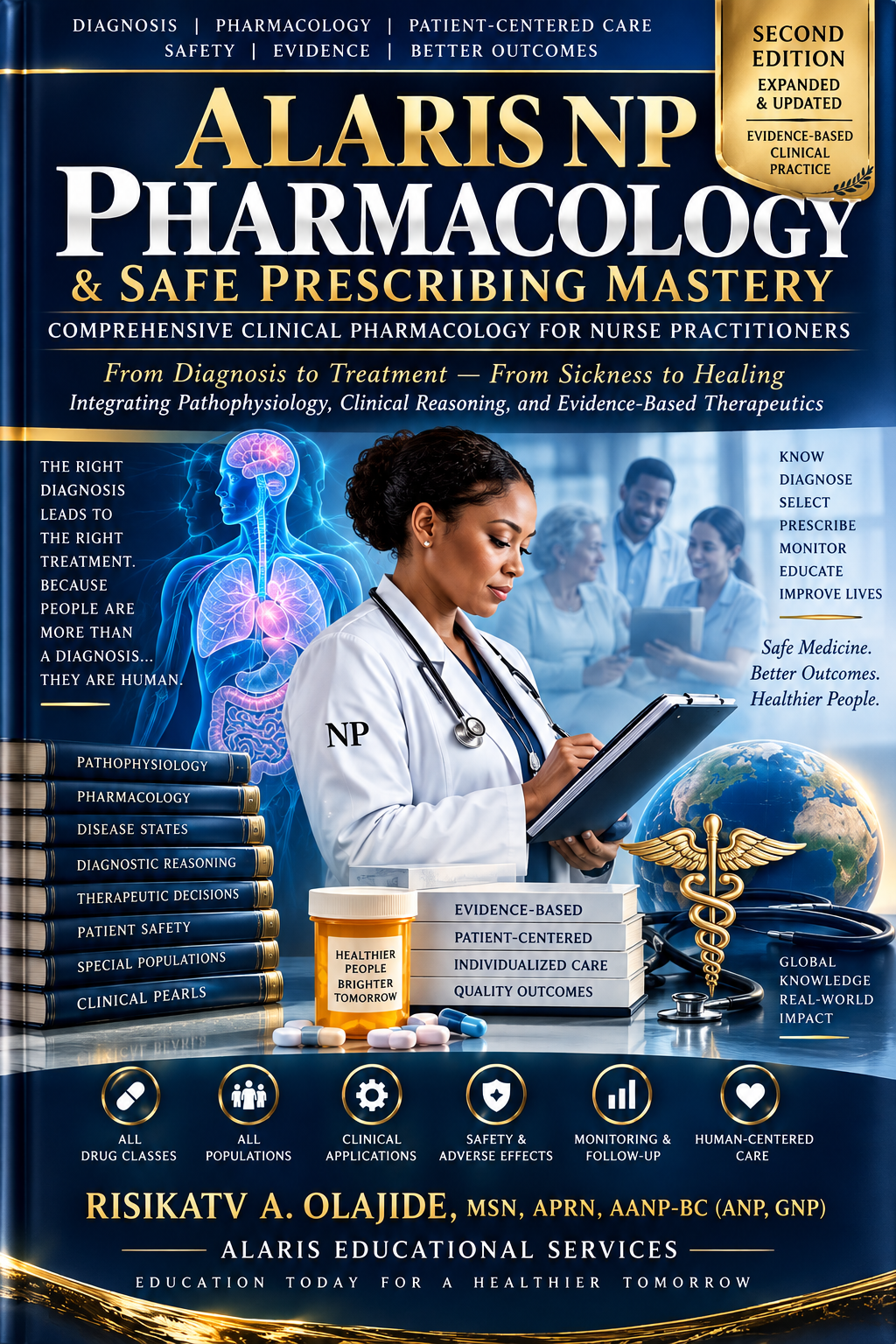
Comprehensive Clinical Pharmacology for Nurse Practitioners
Publisher: ALARIS EDUCATIONAL SERVICES
Author: RISIKATV A. OLAJIDE, MSN, APRN, AANP-BC (ANP, GNP)
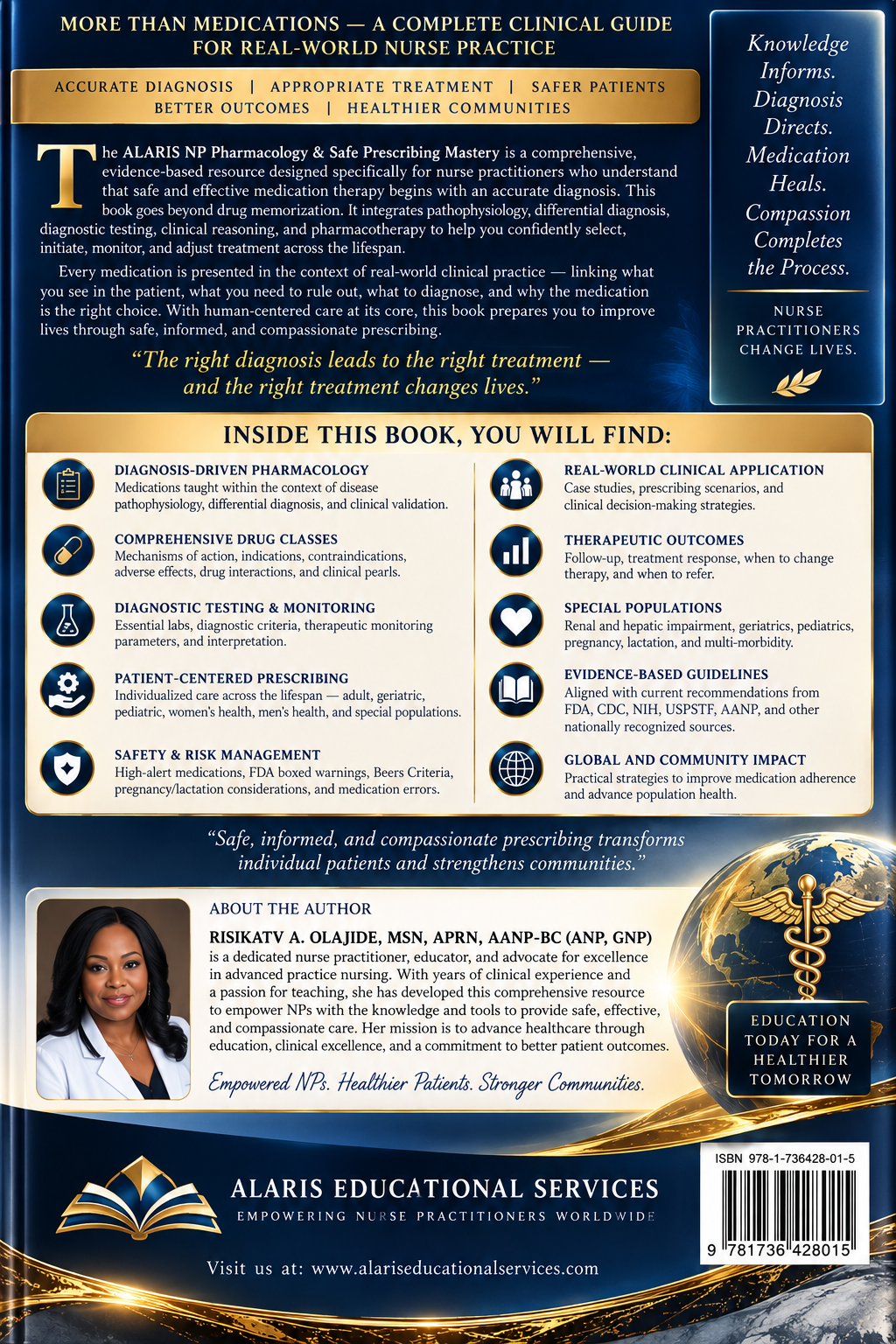
ALARIS NP Pharmacology & Safe Prescribing Mastery is a comprehensive clinical pharmacology resource developed to strengthen the connection between diagnosis, evidence-based treatment selection, medication management, prescribing safety, monitoring, and patient outcomes in nurse practitioner practice.
Rather than presenting medications as isolated lists to memorize, this resource is designed around the clinical decisions nurse practitioners encounter when determining what condition is being treated, when pharmacologic therapy is indicated, which medication or therapeutic class is appropriate, when a medication should be avoided, what must be assessed before prescribing, and how treatment should be monitored after initiation.
The book is designed to support NP students, practicing nurse practitioners, clinical coursework, clinical rotations, certification preparation, and continued development of safe prescribing knowledge.
DIAGNOSIS-TO-TREATMENT CLINICAL INTEGRATION
Pharmacology becomes clinically meaningful when medication selection is connected to the patient’s diagnosis and individual circumstances. Accordingly, the ALARIS approach emphasizes the relationship among:
Clinical presentation → Diagnosis → Treatment indication → Medication selection → Safety assessment → Monitoring → Response → Follow-up
Where clinically applicable, pharmacologic management is considered in the context of the condition being treated, therapeutic goals, first-line and alternative treatment approaches, patient-specific considerations, contraindications, precautions, interactions, monitoring requirements, treatment response, and circumstances requiring escalation or referral.
MEDICATION SAFETY AND ADVERSE-EVENT RECOGNITION
Safe prescribing requires considerably more than knowing a drug’s name and indication. The resource emphasizes clinically significant medication risks, including:
- Common adverse effects
- Serious and potentially life-threatening adverse reactions
- Contraindications and important precautions
- Drug-drug interactions
- Drug-disease interactions
- Clinically important drug-food or substance interactions when applicable
- Allergies and hypersensitivity concerns
- Renal and hepatic considerations
- Pregnancy and lactation considerations when relevant
- Pediatric and geriatric prescribing considerations
- Medication-related laboratory abnormalities
- Monitoring requirements
- Toxicity recognition
- Warning signs requiring medication discontinuation or urgent evaluation
- Patient counseling and medication-safety education
Particular attention is directed toward distinguishing an expected or manageable adverse effect from a potentially dangerous medication reaction requiring immediate intervention.
SAFE PRESCRIBING AND MONITORING
The resource reinforces the clinical responsibilities surrounding medication therapy, including appropriate pretreatment assessment, medication reconciliation, therapeutic goals, relevant baseline laboratory evaluation, ongoing monitoring, evaluation of effectiveness, recognition of treatment failure, and appropriate follow-up.
Students are encouraged to think beyond:
“What drug treats this disease?”
and instead ask:
“Why is this medication appropriate for this patient, what could make it unsafe, what must I monitor, how will I know whether it is working, and what findings require me to change or stop treatment?”
PATIENT-SPECIFIC PHARMACOTHERAPY
Medication decisions may change substantially according to age, pregnancy status, renal function, hepatic function, comorbidities, concurrent medications, allergies, previous treatment response, and other patient-specific factors.
The book therefore emphasizes individualized pharmacotherapy rather than one-size-fits-all medication selection.
HIGH-RISK MEDICATION AWARENESS
Enhanced attention is given to medication classes and clinical situations in which prescribing errors or inadequate monitoring may produce significant patient harm. The educational approach reinforces careful medication selection, contraindication screening, interaction assessment, monitoring, patient counseling, and recognition of serious adverse events.
CLINICAL REASONING FOR NURSE PRACTITIONERS
The purpose of ALARIS NP Pharmacology & Safe Prescribing Mastery is not simply medication memorization. Its purpose is to help develop the clinical reasoning necessary to understand the complete medication-management process:
Diagnose appropriately. Select therapy thoughtfully. Prescribe safely. Recognize interactions and contraindications. Monitor deliberately. Identify adverse events early. Educate the patient clearly. Evaluate treatment response. Know when treatment must be modified, discontinued, or escalated.
This diagnosis-to-treatment framework is intended to help nurse practitioners build stronger pharmacologic judgment while maintaining patient safety as the central priority.

Reviews
There are no reviews yet.