
Description
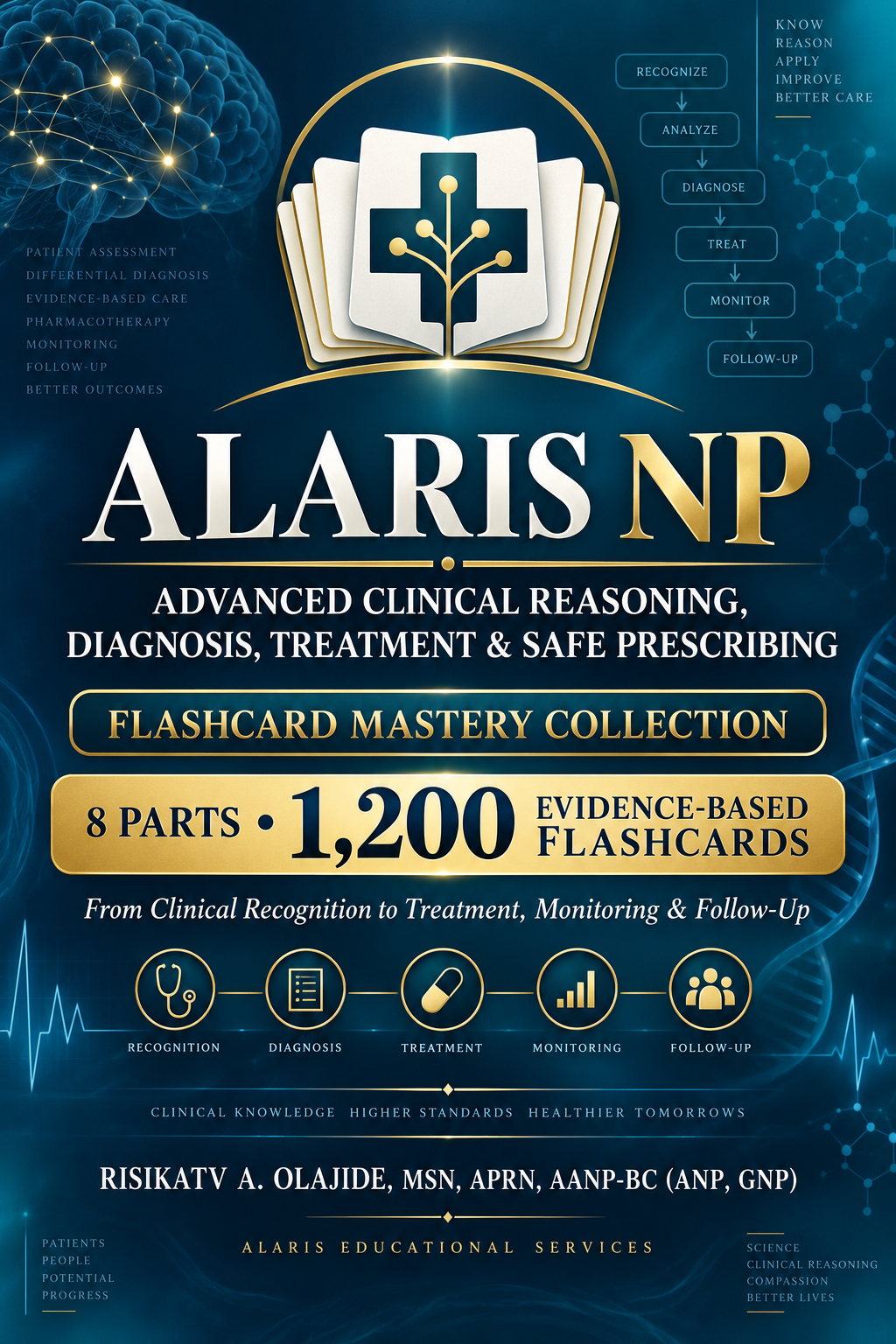
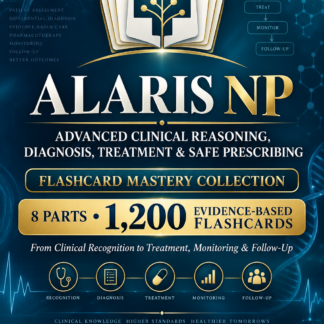
ALARIS NP ADVANCED CLINICAL REASONING, DIAGNOSIS, TREATMENT & SAFE PRESCRIBING FLASHCARD MASTERY COLLECTION
Eight Integrated Parts | 150 Flashcards Per Part | 1,200 Unique, Evidence-Based Flashcards
The ALARIS NP Advanced Clinical Reasoning, Diagnosis, Treatment & Safe Prescribing Flashcard Mastery Collection is an extensive clinical learning and certification-preparation resource created for nurse practitioner students, certification candidates, and practicing advanced practice clinicians.
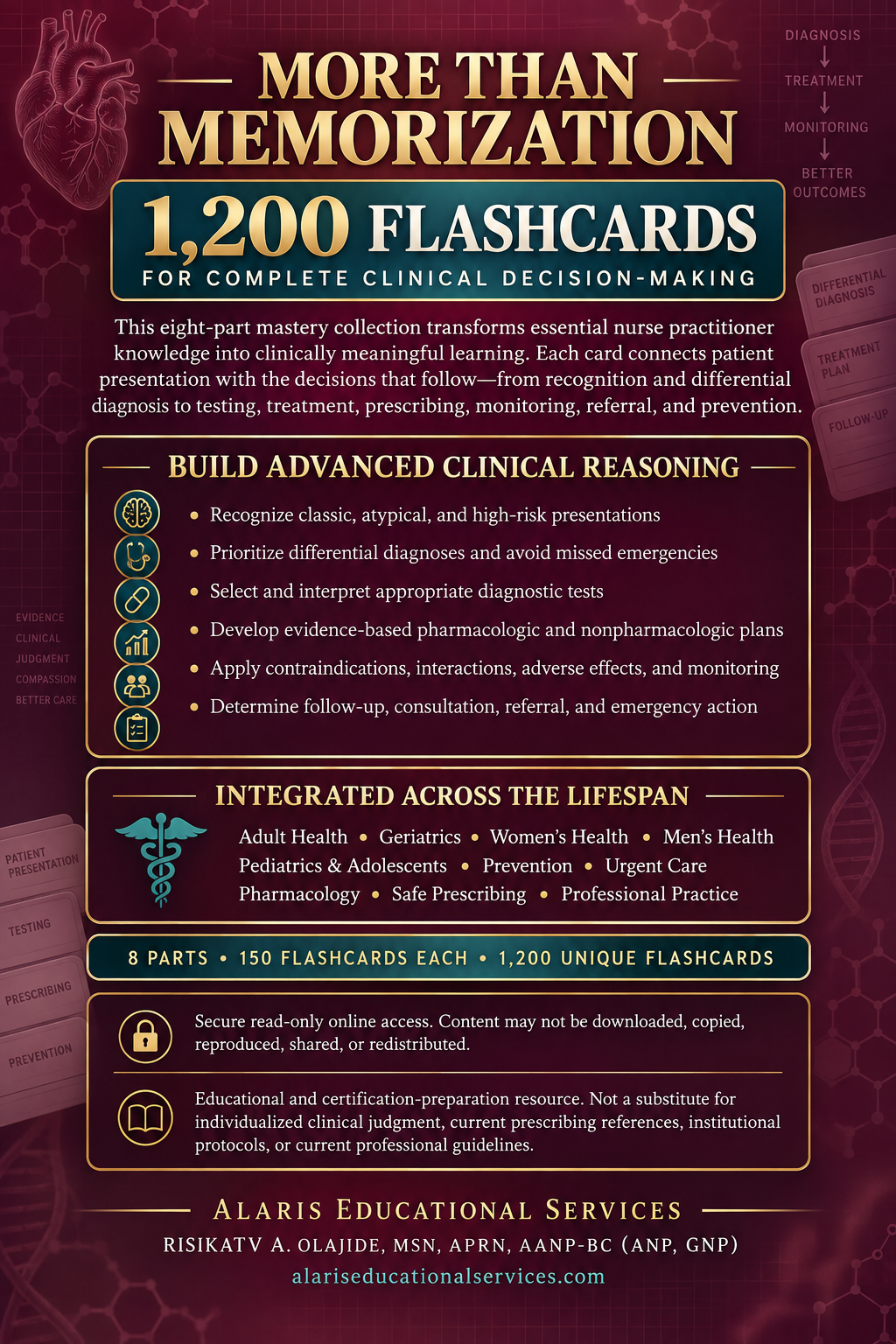
This is not a collection of simple definitions or isolated facts. Each of the 1,200 flashcards is designed to strengthen the learner’s ability to recognize clinical patterns, identify the most likely diagnosis, construct an appropriate differential diagnosis, select diagnostic tests, interpret important findings, initiate evidence-based treatment, prescribe safely, monitor outcomes, and determine the appropriate level of follow-up or referral.
The collection integrates knowledge across adult health, geriatric care, women’s health, men’s health, pediatric and adolescent care, preventive medicine, diagnostic reasoning, pharmacology, urgent and acute care, and professional practice.
WHAT STUDENTS WILL LEARN
CLINICAL RECOGNITION AND PATTERN IDENTIFICATION
Students will learn how to recognize common, serious, and potentially life-threatening conditions based on presenting symptoms, history, physical examination findings, risk factors, age, comorbidities, medication history, and clinical context.
The flashcards reinforce the ability to distinguish an expected clinical presentation from an atypical presentation and to recognize findings that require immediate evaluation.
DIFFERENTIAL DIAGNOSIS AND CLINICAL REASONING
Students will practice moving beyond symptom memorization to structured clinical reasoning. The collection helps learners identify the most likely diagnosis, consider appropriate alternative diagnoses, and determine which clinical findings support or weaken each possibility.
Clinical scenarios encourage learners to differentiate conditions with similar presentations and identify dangerous diagnoses that must not be missed.
DIAGNOSTIC TESTING AND INTERPRETATION
The collection reviews appropriate laboratory studies, imaging, point-of-care tests, screening tools, diagnostic criteria, and confirmatory evaluations.
Students will learn when testing is indicated, which test should be ordered first, how results influence clinical decisions, and when unnecessary testing should be avoided.
TREATMENT AND CLINICAL MANAGEMENT
Flashcards address evidence-based initial treatment, alternative treatment, nonpharmacologic management, patient-specific treatment selection, reassessment, and long-term disease management.
Students will learn how factors such as age, pregnancy status, renal or hepatic function, allergies, comorbidities, medication interactions, treatment history, disease severity, and patient preferences affect the plan of care.
PHARMACOLOGY AND SAFE PRESCRIBING
Medication-focused flashcards strengthen knowledge of therapeutic classes, mechanisms of action, indications, contraindications, adverse effects, drug interactions, dosing considerations, monitoring requirements, and patient counseling.
The collection emphasizes safe prescribing for children, older adults, pregnant or breastfeeding patients, and individuals with renal impairment, hepatic impairment, multiple chronic conditions, or polypharmacy.
MONITORING, FOLLOW-UP, AND TREATMENT RESPONSE
Students will learn what should be monitored after treatment begins, when the patient should return, how therapeutic response should be evaluated, and which findings indicate treatment failure, disease progression, or medication toxicity.
The collection also reinforces when a treatment plan should be continued, adjusted, discontinued, or escalated.
REFERRAL, CONSULTATION, AND EMERGENCY WARNING SIGNS
The flashcards help students differentiate conditions that can be managed in primary care from those requiring specialty referral, urgent evaluation, emergency department transfer, or immediate stabilization.
Students will review red-flag symptoms, unstable findings, time-sensitive diagnoses, and situations in which delayed intervention could cause serious harm.
PREVENTION, SCREENING, AND HEALTH PROMOTION
The collection incorporates risk assessment, age-appropriate screening, immunization, behavioral counseling, lifestyle modification, disease prevention, and anticipatory guidance across the lifespan.
Students will strengthen their ability to incorporate preventive services into both routine visits and chronic-disease management.
PATIENT EDUCATION AND SHARED DECISION-MAKING
Flashcards reinforce practical patient teaching regarding medications, adherence, self-monitoring, lifestyle interventions, symptom management, safety precautions, follow-up requirements, and warning signs that require urgent medical attention.
The content supports culturally responsive communication and patient participation in informed clinical decisions.
POPULATION-SPECIFIC CARE
Clinical content addresses the distinctive assessment and management needs of:
• Adults with acute and chronic health conditions
• Older adults with frailty, functional changes, multimorbidity, and polypharmacy
• Women across reproductive and postmenopausal stages
• Men requiring preventive, reproductive, and urologic care
• Children and adolescents with age-specific presentations and treatment considerations
• Pregnant and breastfeeding patients requiring safe treatment selection
• Patients with complex medical, behavioral, and social needs
PROFESSIONAL PRACTICE AND PATIENT SAFETY
The collection reinforces ethical decision-making, documentation, informed consent, confidentiality, scope of practice, interdisciplinary collaboration, quality improvement, risk reduction, and safe transitions of care.
A COMPLETE EIGHT-PART LEARNING COLLECTION
The 1,200 flashcards are organized into eight parts containing 150 unique flashcards each. Together, the eight parts create a comprehensive and integrated learning experience without relying on repetitive questions or superficial memorization.
Students can use the collection to:
• Build a strong clinical foundation
• Strengthen diagnostic reasoning
• Connect assessment findings to clinical decisions
• Review high-yield certification content
• Identify personal knowledge gaps
• Improve treatment-selection skills
• Reinforce safe and responsible prescribing
• Practice applying knowledge to clinical situations
• Prepare for clinical rotations and certification examinations
• Maintain and refresh knowledge after graduation
The collection is designed to help learners answer not only “What is the diagnosis?” but also:
• What findings support the diagnosis?
• What dangerous alternative diagnosis must be considered?
• What is the most appropriate next step?
• Which diagnostic test is indicated?
• What is the evidence-based treatment?
• Is the proposed medication safe for this particular patient?
• What monitoring and follow-up are required?
• When should the patient be referred or transferred?
• What must the patient understand before leaving the visit?
Every section supports the development of thoughtful, safe, and clinically prepared nurse practitioners.
STUDENT ACCESS NOTE
This educational product is provided through the ALARIS EDUCATIONAL SERVICES website for secure, read-only online study. Students may access and review the flashcards during their authorized access period.
The collection is not downloadable, printable, shareable, transferable, reproducible, or intended for redistribution.
The content is provided for education and certification preparation. It does not replace individualized clinical judgment, current prescribing references, institutional protocols, consultation with appropriate specialists, or the most current professional and governmental guidelines.
Publisher: ALARIS EDUCATIONAL SERVICES
Author: RISIKATV A. OLAJIDE, MSN, APRN, AANP-BC (ANP, GNP)
Reviews
There are no reviews yet.